Sunday, 4 August 2019

BFOR BLOG BLITZ: How it all Began


This is me, Claire Baldry. I’m a retired headteacher and English advisor. I've published five small poetry books, one novella and two novels. I set up the BFOR facebook group and website in October 2017.


The trigger was a chance remark I made on a wonderful facebook group called ‘Book Connectors’. I can’t remember the exact wording, but I mentioned how publishers and agents seemed to place little importance on books with older characters or themes. The resulting discussion was long and passionate, and the response was massive. A very large number of writers and readers expressed their concern that they felt that later-life issues were not considered of value in the publishing world. So I set up a facebook group to focus on this issue and then a website where we could showcase books which fitted with the themes which we were beginning to develop. Here are the links:
Almost two years later, the facebook group is still growing, and we now get more than a thousand hits on the website every month.  

It hasn’t all been plain sailing. Despite acceptance of ‘chick-lit’ and YA in fiction in the publishing world, a proportion of readers and writers accused me, sometimes even abused me, for daring to suggest that some themes tended to appeal more to an older audience. Not wishing to appear ageist or in some way belittling the interests of readers, I grappled with the vocabulary. I couldn’t help but feel that we were victims of a Western Society which can be very negative about ageing. We often hide the idea of growing older in euphemisms such as ‘senior citizen’ or 'third age'. As a newly established group, we discussed this issue in depth.  We eventually moved away from defining a specific age group and settled for the idea of a variety of themes which tend to appeal to readers in mid-life and beyond. We didn’t want to tell people what to read, but rather to promote a wider choice. The website developed into pages of online bookshelves crammed full of books which fitted our themes. Wishing to promote the positive aspects of ageing, we kept the word ‘older’, decided to use it proudly, but added the strapline ‘Because we never stop Reading’.

We began to broaden our activities. We now send out occasional newsletters, organise giveaways, and have run a stall at a local Litfest’.


Many of our members continue to blog passionately about the cause and have taken up invitations to take part in interviews about BFOR including a great ALLII podcast. One of the highlights for me was my inclusion last year in an interview about books with older protagonists on BBC Radio London.
A large number of  authors now want their books to be included on the site, and the website is now so popular that I regularly have to close submissions in order to catch up. I am particularly proud of our ‘Book Club’ page where readers can download free book-club questions written by the authors. It also includes some group discounts for book clubs.

Do we have a future goal? Not a clearly defined one, though we are undoubtedly making progress. Other websites, bloggers and occasional publishers are starting to take an interest. It would be good to see more bookshops and online sellers taking note and beginning to signpost readers to books which might specifically appeal to readers in mid-life or beyond. It would be even better if more agents and publishers recognised the value of an older generation of readers who want to be taken seriously and spend their time and money on books with themes which appeal to them.  

What we have achieved already is an amazing community of readers, writers and bloggers (mostly aged over 40) with a common interest.  I feel proud and honoured to be a part of it. This month long Blog Blitz, which starts today is evidence of how far we have come. Please drop in and read the posts. I feel sure you won’t be disappointed.     
           
Likely themes within the books are second chances, late life career changes, adjusting to retirement, bereavement, love in later life, divorce, relationships with adult offspring and ageing parents, and stories with older characters whose age is in some way central to the plot. At least some of the content is likely to reflect the perspective of the more mature characters, albeit sometimes in a very subtle way.

Friday, 2 August 2019

The Lady Who Steals Sandwiches

We have almost reached the half-way point of the small blog tour for 'My Daughter’s Wedding'. So firstly can I send an enormous thank you to everyone who has, or will, make a contribution this week or soon after.
One of the things I really like about blog tours is that they are very flexible and still developing. There are no real rules. A blog tour can be any length, any frequency, include experienced or first-time book bloggers (they are all wonderful). So, as the organiser of my own little blog tour, I have dared to include a contribution from myself. I hope that someone out there finds it interesting.
I want to share a few thoughts about one particular aspect of the story-line in my latest book, namely the lady who steals sandwiches…….


Where did the idea come from?   
I belong to a small social group in my home town of Bexhill on Sea. We organise loads of different activities, but most Friday mornings we meet for a chat at a little cafĂ© on the seafront. Almost three years ago, I was sitting at one of these meet-ups, and, for some reason, we found ourselves sharing anecdotes about funerals. Someone in the group (I wish I could remember who) told me a true story about a lady in Bexhill who used to gate-crash funerals and sneak off  afterwards with a bag full of sandwiches. I was still editing  my first novel ‘Different Genes’ at the time, but I remember thinking that I would like to include this character in my next novel. I wondered who the lady was and why she chose to steal food on such occasions. Was her behaviour a compulsion? Was she hungry maybe? How old was she? What did she look like? And by the time I was editing the second novel ‘My Daughter’s Wedding’, this person had taken up a third of the book. Not wishing to give the story away, I can’t tell you much about her, but I can say that she was responsible for the three part structure of the book. It was the 'sandwich lady who allowed me to use the knowledge of children in care and social services which I had gained in my career as a primary headteacher.
Is this lady a credible character? Readers will have to decide for themselves, but I do believe that her words “It's being brought up in care. You're considered to be a responsibility, rather than a person” reflect many of the experiences of  the ‘looked after' children who I met over the years.

If you want to find out more, the novel is an easy read story of love in later life called 'My Daughter's Wedding', and the lady who steals sandwiches finds herself caught up in the plot.

Thank you to everyone who has taken an interest in my latest book. If you do decide to read it, I hope you will find yourselves wanting to turn the pages.  This is the link     

Sunday, 19 May 2019

Dementia Action Week: Reflections on Cassandra Farren's Book 'I've lost My Mum'

Last week I received a digital copy of Cassandra Farren's honestly written short book 'I've Lost My Mum'.  It plots her family's journey as they try to cope with her mother's growing dementia. I didn't intend to read the book in one sitting, but I couldn't help myself. It brought back memories of my own family's struggles, and I needed several packets of tissues to get through it. It wasn't always an easy read, packed full of detail, but the book was grounded in a reality which I experienced through Cassandra's writing.


When it comes to dementia, there are, of course, increasing numbers of people with a tale to tell. This is hardly surprising in so far as average ages are rising, leaving far more time for some of our brain functions to develop symptoms of wear and tear. What does concern me though is that, in an era where we hear about scientists planning to visit Mars and technologists developing cars which drive themselves, a cure for dementia has not yet been found, nor even an effective way of slowing its progress. The provision of care is still patchy, and one person's dementia continues to invade a whole family's life. It torments our relationships and emotional well being with long-lasting impact.

It was over fifty years ago, when as a teenager, I was told that my own grandmother with dementia had been rescued from a motorway wearing only her nightdress, and then almost forty years later that her daughter (my late mum) had also lost the capacity to complete even simple tasks. As a family we had anguished over how best to support both my grandma and my mother. Now almost fifteen years further on, we still feel the hurt, but  we tend to use humour to protect ourselves from the most painful questions. "What will you do" I asked my husband one day, "if you are concerned that you might find me on the motorway in my nightie?"
"I will buy you an expensive nightie" he replied. "I'm not having you going out in anything cheap."
I am now in my sixties, and I remember the good times with my mum and my grandma. I exercise my brain as much as I can, and I sincerely hope I take after my father who was thankfully mentally alert until the very end of his life.   

Anyway, to return to Cassandra's book... she brings the whole issue to life with her honest and empathic writing style. As I read, and I watched her Mum deteriorating, I felt a daughter's pain, but there were some warm moments too which I was privileged to experience alongside the author.

In the 'About the Author' section at the end of the book, it says "Cassandra’s mission is to create a new generation of heart-led authors who collectively make a difference in the world, one book at a time." By chance my writer's group paid a visit to a nursing home this week. We sat alongside the residents, some of whom were in quite severe stages of dementia, and we talked about our writing and shared excerpts. I have no idea if our visit will remain in the memories of some of the residents, but for the time we engaged with them, they laughed with us and showed a passionate appreciation of our work and the fact that we had bothered to make the effort to visit. Every member of our writers group came away feeling empowered. I totally believe in Cassandra's perception of the power of writing to make a difference.


This is the link to Cassandra's book which was published today just before the start of Dementia Action Week. I commend her for having the courage to write it, and feel confident that the book will play a significant role in raising awareness.
You can also check out her website 

Thursday, 25 April 2019

Bexhill on Sea: The Search for Greater Democracy


Every now and then I feel inspired to write a few paragraphs about my hometown of Bexhill on Sea, an Edwardian coastal resort, which is loved by the vast majority of its residents. My inspiration in this post is how, despite its rather sedate facade, our delightful town has been rocked to its core by local politics. Bexhill is part of Rother District Council, and local elections are next week. Please note that any views expressed in this post are my own, and not linked to any political party or candidate.

Rother District Council was formed in 1974 under the Local Government Act. It has 38 councillors of whom 18 represent wards in Bexhill. The electoral organisation is odd in so far as the other two towns in the electoral district, Rye and Battle, have their own Town Councils, but the largest town, Bexhill, does not. The imposing Town Hall in Bexhill houses a majority of councillors who represent areas outside of the town.


Bexhill has a well established and enviable community identity which is valued by its residents. There are numerous examples of volunteers from all political persuasions working together to benefit the people and heritage of our lovely town. Rother District Council is not responsible for the historic electoral arrangements, but, bearing in mind the uniqueness of the town, it is unsurprising that many voters are now uncomfortable at being governed by a majority of councillors who represent wards outside of Bexhill, some of whom appear to have rather less local knowledge than the residents. 

Despite this, the creation of a Bexhill Town Council has been vigorously opposed by most members of the current Council. They have chosen to ignore the views of those residents in Bexhill who feel that the creation of a Town Council followed by a Bexhill Neighbourhood Plan would be a massive step towards giving the residents of Bexhill greater local representation. In a recent consultation over 90% of respondents, who participated, said they wanted a Town Council, so it is hardly surprising that giving Bexhill a greater say in its own governance has become a very high profile issue. There are of, course, various other local issues, but the creation of a Town Council is part of the manifesto put forward by many candidates, including a growing number of Independents. Feelings are running very high, and it is the talk of the town.

Once the local election is over, (less than a week to go now), we will still all have to live and work and volunteer together and contribute to our wonderful community. I believe that whatever the outcome of the election next week, most residents of Bexhill will continue to promote the town and help it to thrive. Despite a few very vocal people with varying connections to Bexhill (including, sadly, the occasional councillor or candidate) who have seemed unable to discuss local politics without resorting to unnecessary personal attacks, there are numerous examples of locals with opposing views collaborating and teasing out the issues which will benefit our lovely town, both on social media and in face to face discussions. But it could be so much better.

So if you get a chance to glance at the results of the local elections next week, take a look at Rother District Council. I am rather hoping that we will show how much we care about our town with a record breaking turnout.

Thursday, 4 April 2019

The Language of Facebook


Before I begin, I wish to state that I am writing this post, as someone who is very interested in the way we use language on social media. I am not a member of any political party, and have always voted locally for what I feel is best for my hometown regardless of the candidate's political allegiance.

The reason I have to state this is because we have a local election coming in up in my hometown of Bexhill. The list of candidates was announced today, and a variety of opinions have already appeared all over social media, some funny, some informative, some with covert messages, and some downright unpleasant. For anyone who is robust enough to engage about politics on social media, this will come as no surprise. The allegedly ‘sleepy’ town of Bexhill on Sea is not immune to online sniping, and feelings are running high.

Anyway, you will be relieved to know that I am not intending to weigh up the pros and cons of any political proposal in this blog post. The election is only relevant to what I am saying, insofar as I have been reflecting on the sometimes underhand methods which some people use on Facebook to promote their particular cause.

I’ve had a bit of fun and invented vocabulary for the subtle and not so subtle methods which I have observed. It isn’t really funny though. At best, the methods below are misleading, and at worst they downright malicious.

So here goes:

  1.  Facebardment    Definition ‘Continuing to post the same view again and again on a Facebook thread until dissenters eventually feel bombarded and either believe the assertion is true or just give up.’
  2.  Facescaring   Definition ‘Repeatly dropping exaggerated claims about the negative consequences of a proposal, until people begin to think they're true.’
  3.  Facelittling   Definition ‘Using judgemental words such as 'claptrap' or 'get a life' about someone else’s post so that they feel belittled and back off.' This is particularly effective if carried out by someone with a high profile role in the local community’. 
  4.  Faceduets   Definition ‘Staging a pre-arranged conversation when one person appears to ask a genuine question, and another steps in with a political response. One way of spotting this is to look for people who engage together a lot and are very quick to reply to each other.
  5. Facewhispering Definition ‘ Making an unsubstantiated or false claim about someone whose viewpoint differs from your own, for example suggesting that they have a fake Facebook ID or are part of an extreme political group.’ Although the claim may then be contradicted, it is often too late, and the whispers continue. 
  6.   Facetwisting   Definition   'Repeating someone's post back to them, but with a slightly altered meaning.' An example of this might be if someone expressed a worry about a particular housing development, and the reply implied that the poster was against all new housing.
  7. Facebanter    Definition   'Engaging with someone whom you have never or rarely met with a familiarity which would normally be reserved for your closest family or friends, then accusing the person of having no sense of humour when they express their offence.
  8. Facesmiles     Definition  'Posting an unwanted insult or negative personal comment followed by LOL or a succession of smiley faces. The poster can then claim that it was just a joke.      
   So what am I hoping to gain from this blog post? Probably not a lot, but if one person more feels strong enough to confront the perpetrators, then I will have achieved something.

Can you think of any more examples?

www.clairebaldry.co.uk


Monday, 18 March 2019


Books For Older Readers: Newsletter Four


Because we never stop reading.........
As the ‘Books for Older Readers’ group begins to work its way through its second year, here are some statistics:
The BFOR website has now had over 21,000 hits.
There are 8 pages of books, including a selection of shorter reads and poetry.
We have 426 members in our facebook group, 137 followers on twitter, and numbers continue to grow.
So what’s been happening on the site?
February brought a new initiative for Book Clubs to the BFOR website. If you visit our Bookclub page you will find a selection of books with really interesting free downloadable sets of questions written by each author. There are also some excellent discounted offers for multiple copies. We hope you find this useful. We would also welcome any feedback about the page. Please help us to grow by sharing the website and facebook group with others who may be interested.
Author News
Christine Webber, one of our original members, is now offering her services as an audio book narrator, and is pleased to offer a 50% discount on fees to members of the Alliance of Independent Authors. See her website for more details. Rates for members of BFOR will also be discounted.

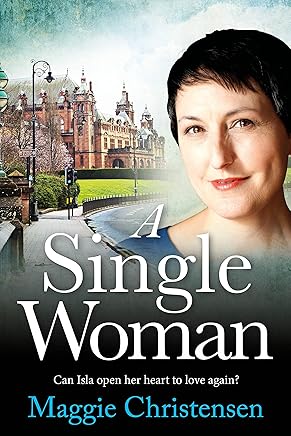
Another of our founder members Maggie Christensen, a prolific writer of books which fit with our BFOR themes, (originally from Scotland, but now resident in Australia) has a series of ebook reductions and a new publication planned. This is the link to her UK Amazon page. Look out for the release of a ‘A Single Woman’ on 9th May.


A Single Woman

Set in Scotland and a sequel to Isobel’s Promise. Isla is determinedly single, but finds herself unaccountably drawn to the grief-stricken father of one of her students.

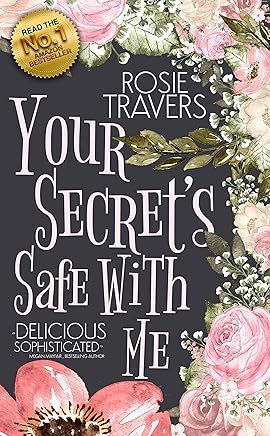
BFOR author Rosie Travers  has recently released a second novel. ‘Your Secret's Safe With Me’, is a romantic suspense novel set on the south coast of England. 
Your Secret's Safe With Me

Both this and her debut novel, ‘The Theatre of Dreams’ will be reduced to 99p on Amazon Kindle for Easter weekend - 19-22 April. Here is the link to her Amazon page .

BEFOR founder, Claire Baldry, will be featured in a new series of author interviews on Lynne McVernon’s blog , ‘Constantly Reinventing’. Here is the link to the blog https://lynnemcvernon.com/


We would like to thank all our followers and subscribers for their continued support.


Sunday, 17 March 2019

After Brexit


I can already hear your sighs as you read the title of this blog post.

However, whatever the outcome of the political fiasco in which we find ourselves, there will come a time when the issue is not headline news. It may take months. It may take years. But the Brexit process will not last forever.
And when the matter is resolved, my one hope is that our political representatives on all sides of the house have long enough memories to learn from what has passed.


I have spent hours watching in horror at the proceedings in the House of Commons. I am an ardent supporter of democracy and polite freedom of speech, but this seems to have developed into a confrontational, party led political system where occasional balanced speeches are drowned out by egotistical rants from every political persuasion. And yes, I know we have a female Prime Minister, but much of the measured discussion seems to be accompanied by loud male grunts. Our ‘great’ political democracy is in danger of becoming the laughing stock of the world.
So after Brexit, or no Brexit, or whatever, this is my plea.
Could we please have MPs who genuinely listen to each other and the electorate.
Could compromise mean compromise, not ‘only if on my terms’.
Could the system allow our politicians of all political viewpoints to admit when they have made a mistake? Guess what, no one is perfect!
Could there be some sort of legal requirement for adequate preparation and scrutiny prior to a referendum?     
Maybe a good start would be to reorganise the proceedings at the House of Commons to make it more family friendly. A bit more required work/life balance for our MPs might encourage a group of politicians, male and female, who understand the ‘give and take’ required for normal people to survive in the real world.

But will anything really change?