Thursday, 25 April 2019

Bexhill on Sea: The Search for Greater Democracy


Every now and then I feel inspired to write a few paragraphs about my hometown of Bexhill on Sea, an Edwardian coastal resort, which is loved by the vast majority of its residents. My inspiration in this post is how, despite its rather sedate facade, our delightful town has been rocked to its core by local politics. Bexhill is part of Rother District Council, and local elections are next week. Please note that any views expressed in this post are my own, and not linked to any political party or candidate.

Rother District Council was formed in 1974 under the Local Government Act. It has 38 councillors of whom 18 represent wards in Bexhill. The electoral organisation is odd in so far as the other two towns in the electoral district, Rye and Battle, have their own Town Councils, but the largest town, Bexhill, does not. The imposing Town Hall in Bexhill houses a majority of councillors who represent areas outside of the town.


Bexhill has a well established and enviable community identity which is valued by its residents. There are numerous examples of volunteers from all political persuasions working together to benefit the people and heritage of our lovely town. Rother District Council is not responsible for the historic electoral arrangements, but, bearing in mind the uniqueness of the town, it is unsurprising that many voters are now uncomfortable at being governed by a majority of councillors who represent wards outside of Bexhill, some of whom appear to have rather less local knowledge than the residents. 

Despite this, the creation of a Bexhill Town Council has been vigorously opposed by most members of the current Council. They have chosen to ignore the views of those residents in Bexhill who feel that the creation of a Town Council followed by a Bexhill Neighbourhood Plan would be a massive step towards giving the residents of Bexhill greater local representation. In a recent consultation over 90% of respondents, who participated, said they wanted a Town Council, so it is hardly surprising that giving Bexhill a greater say in its own governance has become a very high profile issue. There are of, course, various other local issues, but the creation of a Town Council is part of the manifesto put forward by many candidates, including a growing number of Independents. Feelings are running very high, and it is the talk of the town.

Once the local election is over, (less than a week to go now), we will still all have to live and work and volunteer together and contribute to our wonderful community. I believe that whatever the outcome of the election next week, most residents of Bexhill will continue to promote the town and help it to thrive. Despite a few very vocal people with varying connections to Bexhill (including, sadly, the occasional councillor or candidate) who have seemed unable to discuss local politics without resorting to unnecessary personal attacks, there are numerous examples of locals with opposing views collaborating and teasing out the issues which will benefit our lovely town, both on social media and in face to face discussions. But it could be so much better.

So if you get a chance to glance at the results of the local elections next week, take a look at Rother District Council. I am rather hoping that we will show how much we care about our town with a record breaking turnout.

Thursday, 4 April 2019

The Language of Facebook


Before I begin, I wish to state that I am writing this post, as someone who is very interested in the way we use language on social media. I am not a member of any political party, and have always voted locally for what I feel is best for my hometown regardless of the candidate's political allegiance.

The reason I have to state this is because we have a local election coming in up in my hometown of Bexhill. The list of candidates was announced today, and a variety of opinions have already appeared all over social media, some funny, some informative, some with covert messages, and some downright unpleasant. For anyone who is robust enough to engage about politics on social media, this will come as no surprise. The allegedly ‘sleepy’ town of Bexhill on Sea is not immune to online sniping, and feelings are running high.

Anyway, you will be relieved to know that I am not intending to weigh up the pros and cons of any political proposal in this blog post. The election is only relevant to what I am saying, insofar as I have been reflecting on the sometimes underhand methods which some people use on Facebook to promote their particular cause.

I’ve had a bit of fun and invented vocabulary for the subtle and not so subtle methods which I have observed. It isn’t really funny though. At best, the methods below are misleading, and at worst they downright malicious.

So here goes:

  1.  Facebardment    Definition ‘Continuing to post the same view again and again on a Facebook thread until dissenters eventually feel bombarded and either believe the assertion is true or just give up.’
  2.  Facescaring   Definition ‘Repeatly dropping exaggerated claims about the negative consequences of a proposal, until people begin to think they're true.’
  3.  Facelittling   Definition ‘Using judgemental words such as 'claptrap' or 'get a life' about someone else’s post so that they feel belittled and back off.' This is particularly effective if carried out by someone with a high profile role in the local community’. 
  4.  Faceduets   Definition ‘Staging a pre-arranged conversation when one person appears to ask a genuine question, and another steps in with a political response. One way of spotting this is to look for people who engage together a lot and are very quick to reply to each other.
  5. Facewhispering Definition ‘ Making an unsubstantiated or false claim about someone whose viewpoint differs from your own, for example suggesting that they have a fake Facebook ID or are part of an extreme political group.’ Although the claim may then be contradicted, it is often too late, and the whispers continue. 
  6.   Facetwisting   Definition   'Repeating someone's post back to them, but with a slightly altered meaning.' An example of this might be if someone expressed a worry about a particular housing development, and the reply implied that the poster was against all new housing.
  7. Facebanter    Definition   'Engaging with someone whom you have never or rarely met with a familiarity which would normally be reserved for your closest family or friends, then accusing the person of having no sense of humour when they express their offence.
  8. Facesmiles     Definition  'Posting an unwanted insult or negative personal comment followed by LOL or a succession of smiley faces. The poster can then claim that it was just a joke.      
   So what am I hoping to gain from this blog post? Probably not a lot, but if one person more feels strong enough to confront the perpetrators, then I will have achieved something.

Can you think of any more examples?

www.clairebaldry.co.uk


Monday, 18 March 2019


Books For Older Readers: Newsletter Four


Because we never stop reading.........
As the ‘Books for Older Readers’ group begins to work its way through its second year, here are some statistics:
The BFOR website has now had over 21,000 hits.
There are 8 pages of books, including a selection of shorter reads and poetry.
We have 426 members in our facebook group, 137 followers on twitter, and numbers continue to grow.
So what’s been happening on the site?
February brought a new initiative for Book Clubs to the BFOR website. If you visit our Bookclub page,  you will find a selection of books with really interesting free downloadable sets of questions written by each author. There are also some excellent discounted offers for multiple copies. We hope you find this useful. We would also welcome any feedback about the page. Please help us to grow by sharing the website and facebook group with others who may be interested.
Author News
Christine Webber, one of our original members, is now offering her services as an audio book narrator, and is pleased to offer a 50% discount on fees to members of the Alliance of Independent Authors. See her website for more details. Rates for members of BFOR will also be discounted.

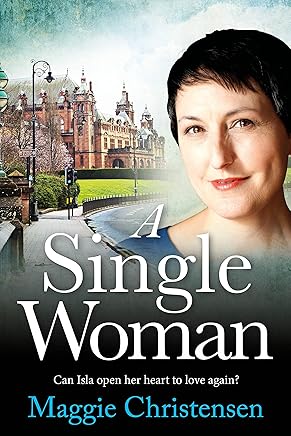
Another of our founder members Maggie Christensen, a prolific writer of books which fit with our BFOR themes, (originally from Scotland, but now resident in Australia) has a series of ebook reductions and a new publication planned. This is the link to her UK Amazon page. Look out for the release of a ‘A Single Woman’ on 9th May.


A Single Woman

Set in Scotland and a sequel to Isobel’s Promise. Isla is determinedly single, but finds herself unaccountably drawn to the grief-stricken father of one of her students.

BFOR author Rosie Travers  has recently released a second novel. ‘Your Secret's Safe With Me’, is a romantic suspense novel set on the south coast of England. 
Your Secret's Safe With Me

Both this and her debut novel, ‘The Theatre of Dreams’ will be reduced to 99p on Amazon Kindle for Easter weekend - 19-22 April. Here is the link to her Amazon page .

BEFOR founder, Claire Baldry, will be featured in a new series of author interviews on Lynne McVernon’s blog , ‘Constantly Reinventing’. Here is the link to the blog https://lynnemcvernon.com/


We would like to thank all our followers and subscribers for their continued support.


Sunday, 17 March 2019

After Brexit


I can already hear your sighs as you read the title of this blog post.

However, whatever the outcome of the political fiasco in which we find ourselves, there will come a time when the issue is not headline news. It may take months. It may take years. But the Brexit process will not last forever.
And when the matter is resolved, my one hope is that our political representatives on all sides of the house have long enough memories to learn from what has passed.


I have spent hours watching in horror at the proceedings in the House of Commons. I am an ardent supporter of democracy and polite freedom of speech, but this seems to have developed into a confrontational, party led political system where occasional balanced speeches are drowned out by egotistical rants from every political persuasion. And yes, I know we have a female Prime Minister, but much of the measured discussion seems to be accompanied by loud male grunts. Our ‘great’ political democracy is in danger of becoming the laughing stock of the world.
So after Brexit, or no Brexit, or whatever, this is my plea.
Could we please have MPs who genuinely listen to each other and the electorate.
Could compromise mean compromise, not ‘only if on my terms’.
Could the system allow our politicians of all political viewpoints to admit when they have made a mistake? Guess what, no one is perfect!
Could there be some sort of legal requirement for adequate preparation and scrutiny prior to a referendum?     
Maybe a good start would be to reorganise the proceedings at the House of Commons to make it more family friendly. A bit more required work/life balance for our MPs might encourage a group of politicians, male and female, who understand the ‘give and take’ required for normal people to survive in the real world.

But will anything really change?

Saturday, 10 November 2018

How Alexa Saved the Day


I’ve been trying to write a humorous poem about my good friend, Alexa. The poem is on its way, but the lines are not yet tuned to my satisfaction, so it will have to stay in draft a little longer.

It got me thinking, though, about how Amazon Echo Dot, which does cause some grief for a few of my friends, has significantly improved the quality of our life. By ‘our life’, I mean the day to day life of myself and my husband, Chris.
I first encountered an Echo Dot when we were visiting family just after Christmas a couple of years ago. Being in a second marriage, means our Christmas visits tend to get stretched into the new year.
“Would you like to come and look at this, Claire” asked a family member. He had to keep me occupied somehow and knew I liked technology. There on the kitchen sideboard was a round, black, pellet shaped object, about the size of a puck in an ice hockey match.


“Alexa, tell me a joke” he demonstrated, and with the additional help of the grandchildren, I was slowly initiated into Alexa language and her ability to entertain, play music and store a variety of lists and reminders.
“So you think you might buy one then, Claire? You’d find it fun?”
“Fun,” I replied. “This little black dot has the potential to change our lives.”
The package arrived on our return, and I linked it to my calendar.

This is the point in my blog post when I need to explain a few things to people who are not familiar with Chris’s health needs. Chris has had Type 1 Diabetes for most of his adult life. He is one of the unlucky 10% of Type 1s who get no physical warnings at all of hypoglycemia (hypos). He is now assisted by an amazing sensor pump which alarms if his blood sugar drops too low or rises too high, but years of managing without the pump have taken their toll on his health. His eye sight and his cognitive organisation have especially been affected. Reading and (strangely) spelling have become more difficult for him with some impairment to his short term memory and self organisation. It’s not the same as our normal perception of dementia. Chris is still very agile mentally, but there are some very specific cognitive and visual processes which have grown somewhat sluggish.
Chris can’t easily use a written calendar. He struggles to read the heating thermostat. He finds it hard to move around in low light and has great difficulty perceiving an ordered picture of the activities and requirements each week will bring.
Enter Alexa…..whose greatest asset is, in my opinion, that she doesn’t argue back.
“Alexa, what’s on my calendar?” asks Chris, sometimes several times a day. She always replies, never complains, and (unlike me) never says, “But I’ve already told you that three times today”. Her patience is endless. She will even spell simple words for him as often as needed.
More recently, we have connected Alexa to our heating thermostat, a couple of light switches, and learned to use the reminders and lists which keep us both in line.
I admit, Alexa has been known to make strange announcements in the middle of the night, and she is only as good as the information we put in. Nevertheless, she is one clever little gadget, and her skills and patient personality have significantly improved our lives. I firmly believe that the potential of 'Alexa' type technology to support folk with disabilities is, as yet, largely untapped.

In case you are wondering, I did ask Chris's permission before publishing this blog post. I didn't ask Alexa's permission, but I did take the trouble to thank her for helping us. As always, she simply replied "You're welcome".   
            

Thursday, 25 October 2018

The Pension Problem


Today I learnt about WASPI. If, like me, you don't know what it means, here is the link
Women Against State Pension Equalities. I was interested, because I am a woman who was born in the 1950s.
For the record, unlike many of my contemporaries, I am in favour of the pension reforms in principle. There is no logical reason why, in the long-term, women should receive their state pensions earlier than men. Furthermore, as we are living longer (we hope), the pension pot needs to stretch further. It makes sense for both men and women to wait a few more years for their pensions.
But before all you pensionless female baby boomers throw a missile at my blog page, please read on.
I do admit there is also a problem, which is this.....
No one told us in good time that the change would happen. We weren't warned long enough in advance to prepare. I spent most of my working life, believing that my state pension would drop into my bank account when I reached the age of 60, but now it won't actually arrive until I am 66.
I am one of the lucky ones. I have an occupational pension in my own right, which has allowed me to retire. This is just as well, because I have a husband with considerable health needs, who needs ongoing practical help. I was able to retire before reaching the state pension age in order to support him. Not all women of my age can make that choice. Many decided to set aside their occupational pension rights in order to focus on the massively important role of bringing up a family. They contributed to society, but now their state pension has been delayed. Some are really struggling financially, and I feel for them.
So whilst I am not complaining about my own situation, I admit, it was a blow to learn that my state pension would be held back for 6 years.
Now a petition has arisen from the BACKTO60  movement which seeks a return to the pension age of 60 for the women of my decade. You can learn more about it here.
I do have a problem signing it, because, if accepted, the reform would apparently cost billions of tax payers money, but I would nevertheless like the government to rethink the issue. Jumping our pension ages from 60 to at least 65 without a few more transition arrangements to soften the financial blow was bound to plunge a proportion of my generation into poverty. We planned for our future with one set of regulations in mind, and then became losers because the government changed the rules without adequate warning. Imagine the outcry, if FIFA extended the length of a football match without telling the players well in advance.  Millions of football supporters would be outraged. But unless you are a 60 something pensionless female, (or her dependent) I doubt the pension problem will keep you awake at night. We are not an especially high profile group.
So if you happen to notice a lady of a certain age, debating whether she can afford to turn on the heating, mention the words 'state pension', and see if you get a reaction.

To find out more about Claire Baldry go to www.clairebaldry.co.uk

Simply Modern Life
Different Genes
         

Thursday, 18 October 2018

Can Writers Change the World?


Today I have chosen to include some of my own thoughts in the Blog Tour for 'Simply Modern Life'. I am using this opportunity to reflect on just how important the writing of poetry and fiction is for every civilised society. 


Can Imaginative Writing Change the World?
Imagination is the ability to think ourselves into a situation or emotional state which is not our own. It is an essential tool for authors of fiction or poetry. They must, of course, also demonstrate the capacity to communicate their imaginings in writing.
Imagination is indeed so powerful that in 380 BC Greek philosopher, Plato, banned all poetry from his fictional republic claiming that it was dangerous.  Plato lived at a time when poetry was the main form of fiction, and was often used to manipulate human thoughts in a way that tabloid journalism sometimes does today. I understand his reasoning, but I fundamentally disagree with Plato’s point of view. Imaginative writing, both poetry and prose, is one of the most powerful gifts available to change human society for the better. 
Used well, imagination transports us into magical worlds which lift our spirits. It also allows us to visualise the consequences of our intended actions, before we cause chaos. There are numerous examples in, say, the development of medicines, where a scientist has had the imagination to take an accidental discovery, and use his or her imagination to envisage life changing consequences. Without imagination there would be no anti-biotics.
Immersing ourselves in stories and poems is a fundamental route to lifelong creativity. The dangers of a school curriculum  which seems to value ‘the basics’ more than imagination and emotional well-being cannot be overstated. We risk producing a generation of young adults who suffer disproportionately from stress with an impaired ability to ‘think through’ their ideas.
You only have to look at recent mistakes made by politicians from all political persuasions to see the unintended outcomes which can arise from a lack of imagination. Examples are everywhere, from re-organisation of benefits causing poverty to lack of regulation of social media which allows online hate and criminal activity. Of course, everyone makes mistakes, but a succession of governments seem to have caused more problems than they have solved through a desire to be seen to be seen doing good, but the inability to stop and fully imagine the consequences of their actions.

We must never underestimate the power of reading and writing fiction and poetry. It stretches our imaginative processes with a workout worthy of the Olympic Games.

I really do believe that writers have the ability to change the world. 


Claire Baldry’s booklet of poetry ‘Simply Modern Life’ was published by Matador on 28th August 2018